Thursday, January 19, 2006

What's New In My Garden

An anonymous comment by a reader has brought me back to virtual reality. Why was I gone so long? Well, where do I start? For one thing, my computer is down so I have to travel to my mother's house whenever I need to use her PC. And may I warn one and all who plan to transport their PC from abroad - DON'T. It will break down and you will loose ALL your files. Ok, enough said about that. Let's get back to gardening.


I am now on my second batch of vegetables to be harvested. The first being the edamame. On 1000 square meters, I was able to harvest 80 kilos of edamame. They were delicious. Sweet and addicting, the plump beans were a hit. Especially with my mom who ordered and ate 20 of the 80 kilos I had. Edamame did well during the rainy season so will be one of the vegetables I will be planting during that season. As for now, I have several varieties of tomatoes, eggplant, peppers and culinary herbs. I had a small problem with tobacco mosaic decease so now the garden is a non-smoking zone. Apparently, the nicotine from the smoke and fingers of the smoker causes this decease and tomatoes are very sensitive to it. But that's ok, only few plants had to be uprooted and burned. My garden is actually abounding with tomatoes!

Some things I need to change about my garden:
1. Cover exposed areas with covercrops, companion plants and beneficial plants. I see too much soil exposure which tells me more nutrients are being depleted unnecessarily. There is not enough diversity in one given area which causes an unbalanced insect population, ergo - some of my plans are being devoured.
2. Landscape design. My garden has to look pretty.
3. All herbs, except those used for companion planting, will be potted.


Thursday, November 17, 2005

Recipe: Edamame


Usually served as an appetizer in Japanese restaurants, edamame is a perfect snack to have at home. It is fresh soybeans which is served simply in a bowl with or without fine sea salt. Soybeans have the highest amount of protein compared to all other legumes.

Plunge fresh edamame into boiling water. Bring water back to a boil and cook beans for 7 minutes. Drain and place under running water to cool. Serve with a sprinkling of fine sea salt.

P.S.
Remove beans from pods before placing in mouth.

Thursday, October 20, 2005

Food that goes well with a Green Salad

Roast Chicken
Roast Pork
Quiche
Cheese Souffle
Steamed Prawns

and a glass of wine...


Friday, October 14, 2005

Gaia's Garden

Have I been gone for 2 months already? I have been reading up on organic farming and marketing, not to mention actual visits to my lovely garden. I will start to regularly post and treat this site more like a farm journal. I am learning more and more about organic farming and would like to pass this on to whomever might find this useful or simply for a good read or anecdote. As soon as I get my new gas range, I will also start posting more recipes.

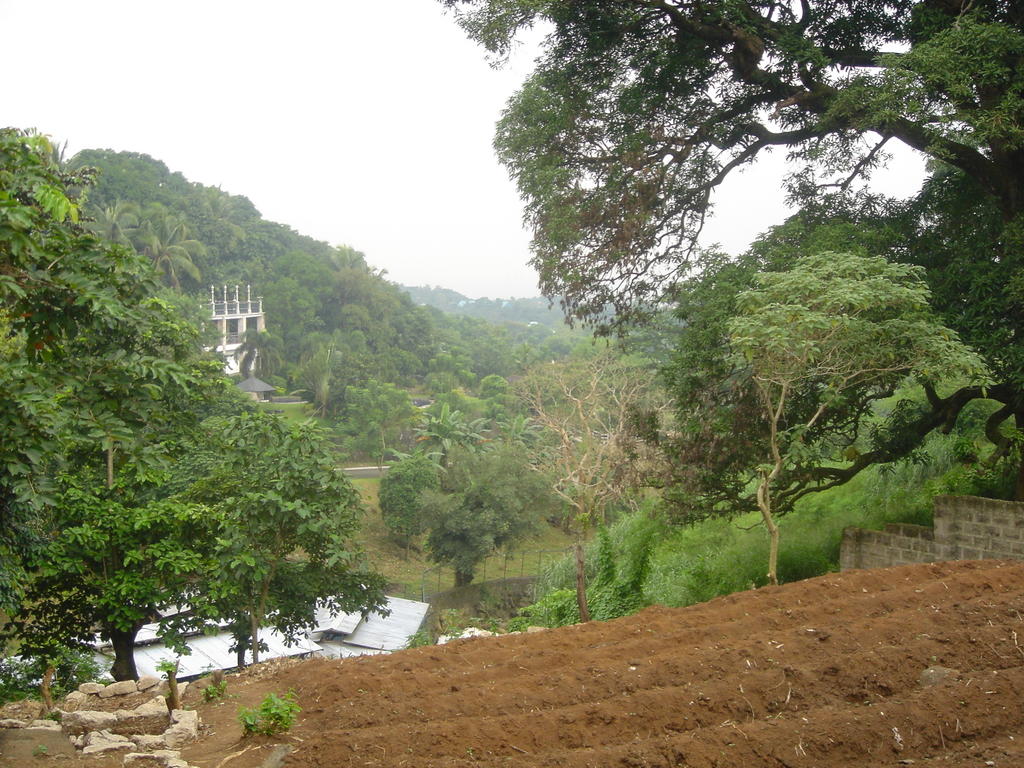
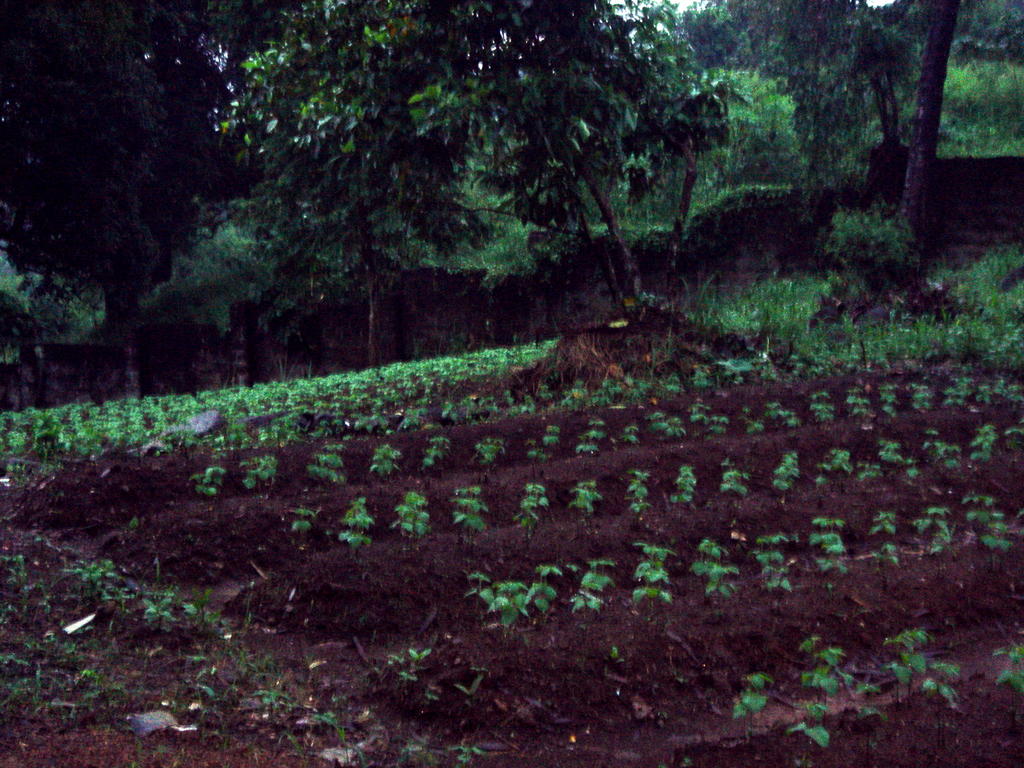
My farm is looking nice with neat rows of vegetable beds and terraces. Here are before & after photos


For harvest in November:

Edamame

Salad Greens:
Sylvetta Arugula
Bau Sin Mustard
Mizuna Mustard
Rosette Green Tatsoi
Purslane
Bronze Arrow Lettuce

Potted Herbs:
Mint
Thyme

I will have a stand in the Organic Market at the Legaspi Park on Sundays starting Nov 6. It’s called Gaia’s Garden and this is what my flyers will say:

Gaia’s Garden is an organic kitchen garden located in Antipolo. We grow gourmet vegetables, fruits and herbs. The variety of produce we have are specifically chosen for their flavor and nutritional value. Gaia’s Garden is organized using sustainable, environmental and organic principles.


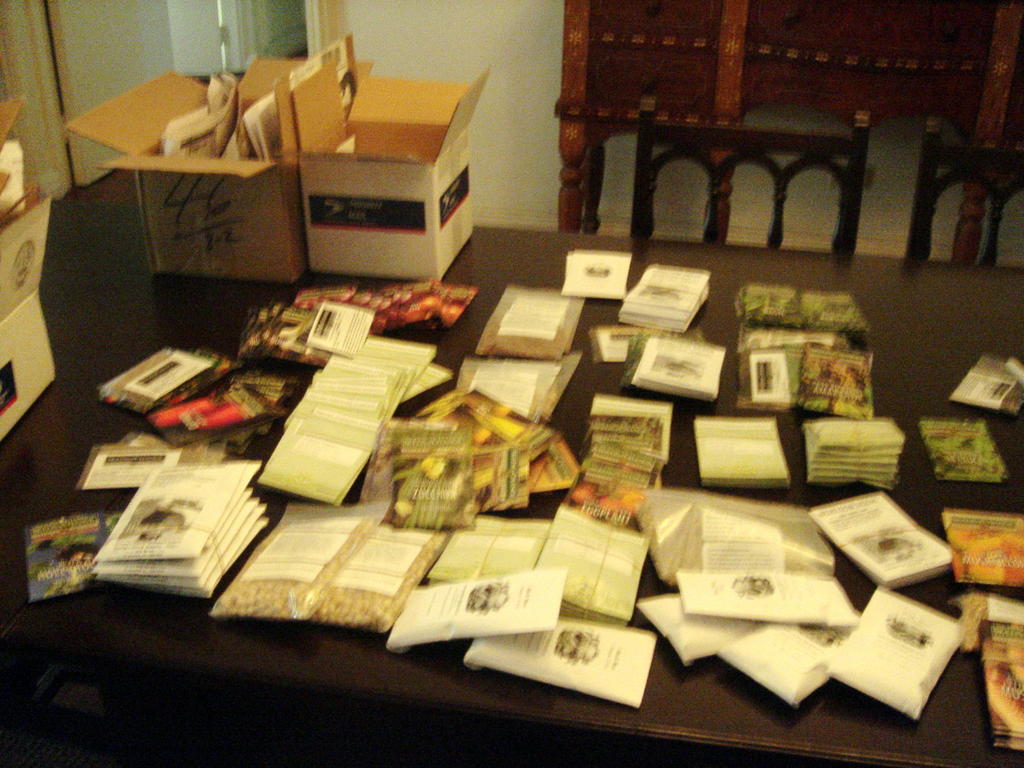
All my seed orders arrived a week ago and we will start germinating next week. I should have a new batch of fruits and vegetables available in January! In the meantime its freshly-picked edamame and salad greens every week at the market. I’m trying to organize a mid-week delivery for those who want fresh vegetables during the weekday. But one step at a time. I still have so much to do for the market!

Thursday, August 25, 2005

Plastic Good Enough to Eat

As I was getting my regular dose of food blogging I came across Food Museum's post on bioplastics. How wonderful I thought! Finally after 10 years of searching for plastic spoons made of cornstarch after reading about it in the unlikely source W magazine. Better late than never, bottling and packaging companies are looking into making plastics made of cornstarch instead of petroleum which is toxic and hazardous to the environment. Bioplastics are biodegradable and edible!

Here are some websites and pdf files to peruse and use, some have homemade recipes for making bioplastics.

Information on cornstarch based biodegradable plastic bags made by Australian company Mater-Bi

An interesting and educational site for science students and anyone else actually

Bioplastics cost the same as conventional plastics and can be eaten too!

Southeast Asian companies into bioplastics

Switching to biodegradable packing fillers

Decomposing cutlery

Turning biodegradable plastic bags into compost
www.hnd.usace.army.mil/techinfo/CPW/PWTB/4204920.pdf

Make your own bioplastic:
extension.usu.edu/aitc/ teachers/pdf/fieldguide1/plastic.pdf
www.agintheclassroom.org/resources/PlasticsFlyer.pdf
www.clover.okstate.edu/fourh/ aitc/lessons/extras/recipes/plastic.pdf


Wednesday, August 17, 2005

Antioxidants

This study by The Organic Center for Education and Promotion shows that organically grown fruits and vegetables contain more antioxidants than those grown conventionally. The site also describes the benefits to your health when eating fruits and veggies that are rich in antioxidants.


Wednesday, July 27, 2005

Organics, Ethics and Snobbery

I read an interesting article about organic food, written by the Accidental Hedonist. It is an article in response to another article written in the New York Times. I completely agree with AH in that organic food and its underlying philosophy is for everyone and actually, should be integrated by everyone, but unfortunately the organic lifestyle tends to be afforded exclusively by the privileged. The article was written with an American perspective but it does apply in every country that grows organic food. All except Cuba where the conventional way of growing fruits and vegetables is organically.


Monday, July 25, 2005

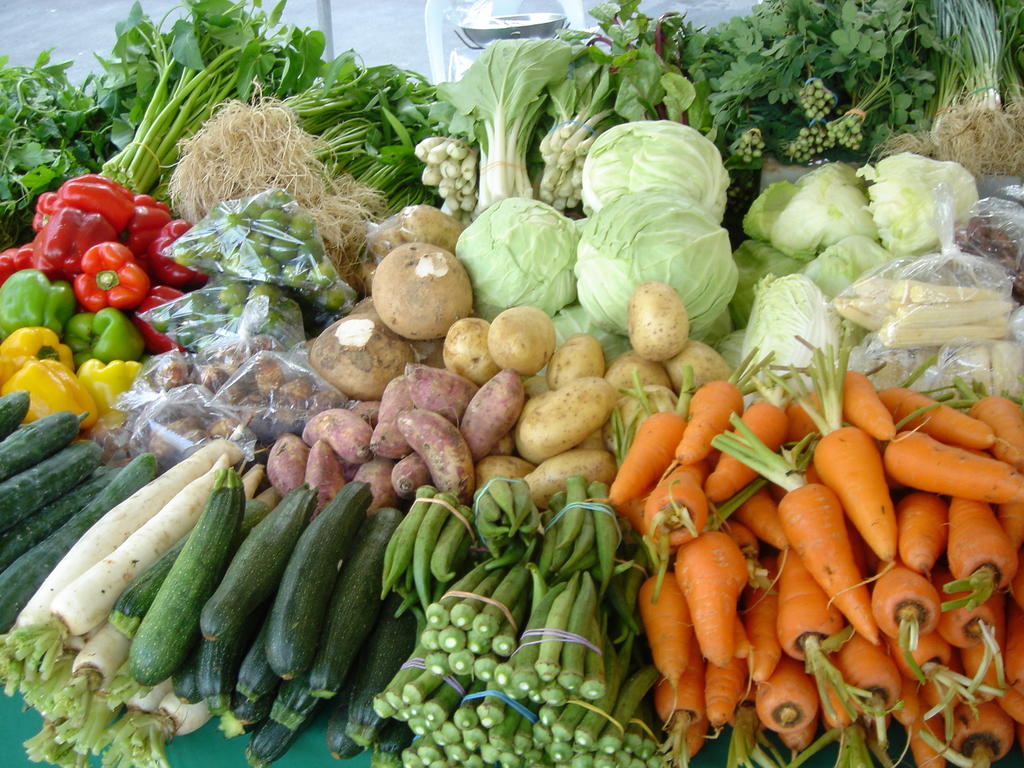
Organic Market


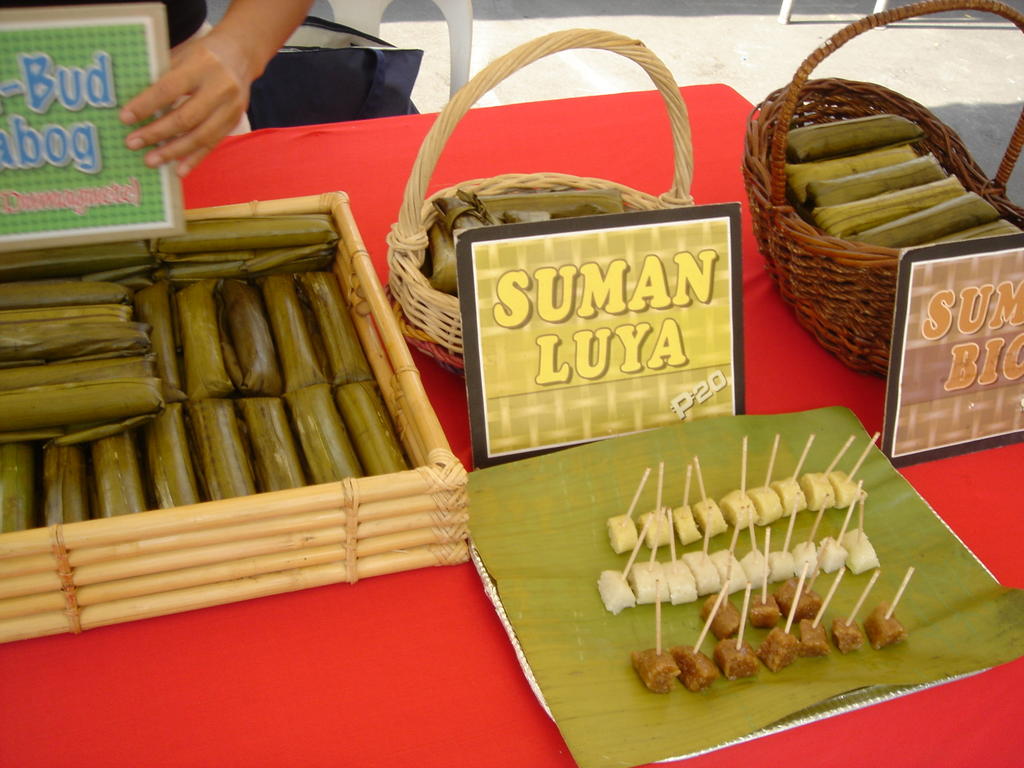
The Organic Market was teeming with fresh produce yesterday. I bought a big load of dalandan, some tomatoes, ampalaya and eggs. I went as early as 7:30 am to catch the sale of millet suman which sells out by 10:00 am. I bought 30 of these pricey sumans to give everyone in my household a taste! Suman, for those not in the know, is a mildly sweet, sticky, glutinous pudding wrapped and steamed in pandan leaves. Suman is usually made with rice and sometimes casava. It is Filipino street food brought to new and nutritious heights by Maribel Van Hoven who cooks and sells the millet suman or bud bud kabog at the Salcedo Market on Saturdays and the Legaspi Market on Sundays. Maribel is a big fan of millet because of its nutritional and culinary value. She wanted to promote the use of this tasty seed and make it a common household food, ultimately creating bud bud kabog. According to Vincent Van Hoven who does the actual selling for his wife (isn't that adorable?) the millet used in their suman grows wild in the mountains of Manguyod, Negros Occidental. The exact location is unknown. Once a week, a lone indigenous gatherer comes down from the mountains and sells the wild millet to the Van Hovens. The millet then travels by plane to Manila and is brought to Ayala Alabang to be cooked into a delicious suman by Maribel. Then the suman is brought to the weekend Markets in Makati. No wonder they're costly!

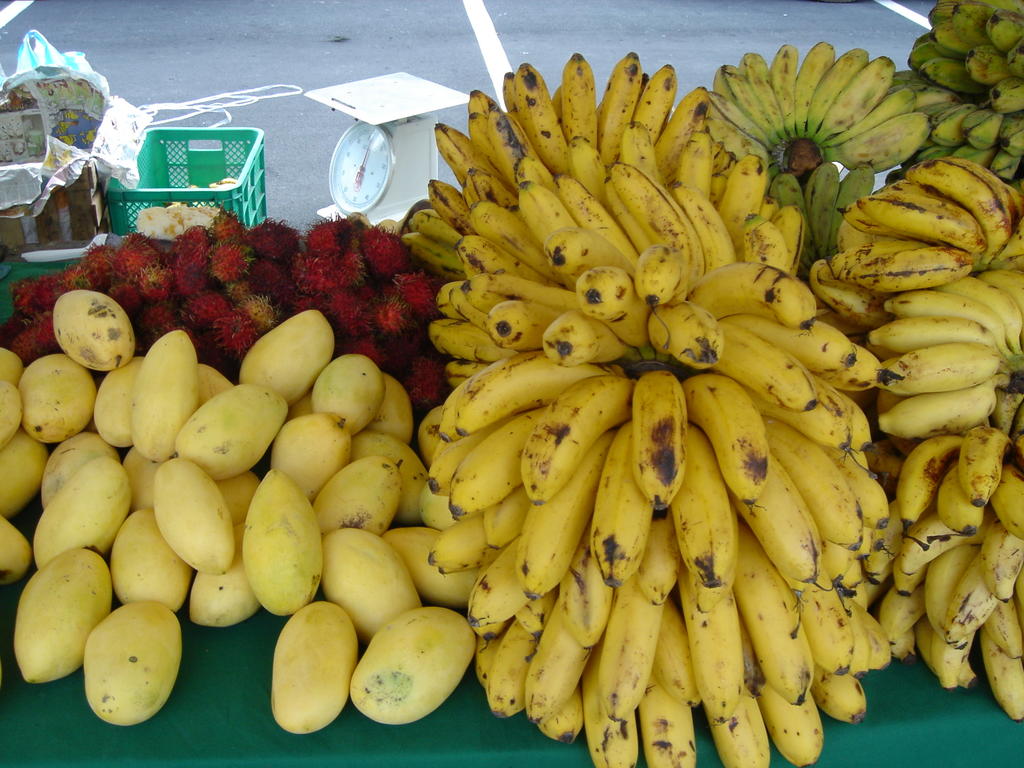
Afterwards, I went with Sister Rosalie to visit Dr. Carandang, a retired Dean of Agronomy in Los Banos, Laguna. He raises ducks and makes salted duck eggs as a hobby. The eggs were good. Not too salty, perfectly cooked and without the toxic red dye commonly used to distinguish salted chicken eggs from plain ones. Salted duck eggs are larger and have more yolk to whites ratio than salted chicken eggs. That's the way I like it. We were a given a tour of his private farm before going to his home for lunch where I met his lovely wife, daughter and grandchild. We were treated to a homecooked meal of Salted Egg Salad, Ubod Lumpia, Vegetable Sinigang and Shrimp Lumpia. For dessert we had Leche Flan made with duck eggs and fresh fruit from the garden. Yes, that's right I said fresh fruits from the garden. The Carandangs have the plumpest lakatan bananas I have ever seen which will be available in my farm next year thanks to the kindness and generosity of Dr. Carandang. They also have rambutan and atis trees growing in their backyard. What an idyllic life.

I then left Sister Rosalie and the charming Carandangs to go to the University of the Philippines, Los Banos DTRI (don't ask me what it stands for) to buy their famous milk, yogurt and carabao cheese. There was no cheese which was very disappointing. Lastly, I went to Herbana Farms to talk with Gil Carandang (no relation to Dr. Carandang), my organic farm landscaper, about my change of plans.

Plans on what to plant on my farm will have to change because the seeds I ordered will arrive in a month and a half. In the meantime, I will have to make use of what's available in the country. There are quite a number of conventional and hybrid seeds available but of course I cannot use. So I will be planting organic seedlings from organic farmers around Luzon. Corn, edamame, herbs, flowers and coffee are on the agenda. These organic produce will be available in two months together with fresh eggs and maybe some sprouts. Ok gotta go and have my breakfast of dalandan juice and bud bud kabog. Bon Apetit!

Monday, July 11, 2005

Recipe: Chocolate Chip Croquant Cookies

I made these cookies for my bestest friend Rosanna's baby shower, which I happily hosted. These cookies were a hit and together with the rest of the menu resulted in a chorus of "Macky, you should open your own restaurant..." Well, I have Nic of blog Bakingsheet to thank for that. I tweaked his recipe, like any self-respecting cook would, and added croquants instead of caramel to the batter. I also used organic Muscovado sugar from Bacolod in place of brown sugar.


Chocolate Chip Croquant Cookies

2 1/2 cups all-purpose flour
1 tsp baking soda
1/2 tsp baking powder
1 tsp salt
1 cup unsalted butter, softened
1 cup sugar
1/2 cup Muscovado sugar
2 eggs
6 ounces dark chocolate, chopped (1 1/2 cups)
1 cup croquant

Preheat oven to 375F.
Whisk together flour, baking soda, baking powder and salt in a medium bowl.
In a large bowl, cream together butter and sugars until light, about 2 minutes. Add in eggs one at a time. Don't worry if the batter separates, just keep beating until it becomes smooth. Stir in flour mixture, followed by croquant and chocolate chunks until batter is uniform and no streaks of flour remain.
Drop rounded tablespoonfuls onto silicon baking sheet. Cookies will spread, so allow at least 2 inches between each cookie. Bake for 10-11 minutes, until cookies are lightly browned around the edges. Allow to cool on the cookie sheet for 5-10 minutes before removing to a wire rack to cool completely.
Makes about 4 dozen.


The rest of the menu...


Whats food without a party?


Saturday, July 09, 2005

Organic Standards

It is very unfortunate that there are no laws requiring organic certification for farms or ready-made food that claim their products organic. Anyone may say they are selling or growing organic produce even if they are not. Anyone may claim organic standards based on their own definition of organic.

I'm learning about all of this as I was innocently buying organic produce wherever a grocer claimed it. When I spoke with Mara Loinaz, a proponent for organic produce and organizer of the Organic Market, she said that most who claim organic are actually not. Mara inspects the farms who want to sell their produce at her market to make sure they are up to her standards of organic. But what exactly are the Philippine standards of organic? The Phil. government has a body that certifies farms and ready-made food, but it isn't required. As I understand it it is used by organic farms that export their produce because the importing countries require certification. I did a little research and found a brief explanation of organic standards by the Department of Agriculture. Similarly, the Agribusiness & Marketing Assistance Service and MASIPAG, "a farmer-led network of people's organizations, non-government organizations and scientists working towards the sustainable use and management of biodiversity...", have both written their standards for organic farming.